Since its beginning in 2010 in Paris, the International Conference on Geotechnics, Civil Engineering and Structures (CIGOS) has solidified its reputation as a prominent global forum for fostering high-quality academic and professional exchanges in geotechnical, structural, and construction engineering. With seven successful editions, CIGOS continues to attract a diverse community of academics, researchers, designers, policymakers, and entrepreneurs to share cutting-edge advancements and innovative ideas.
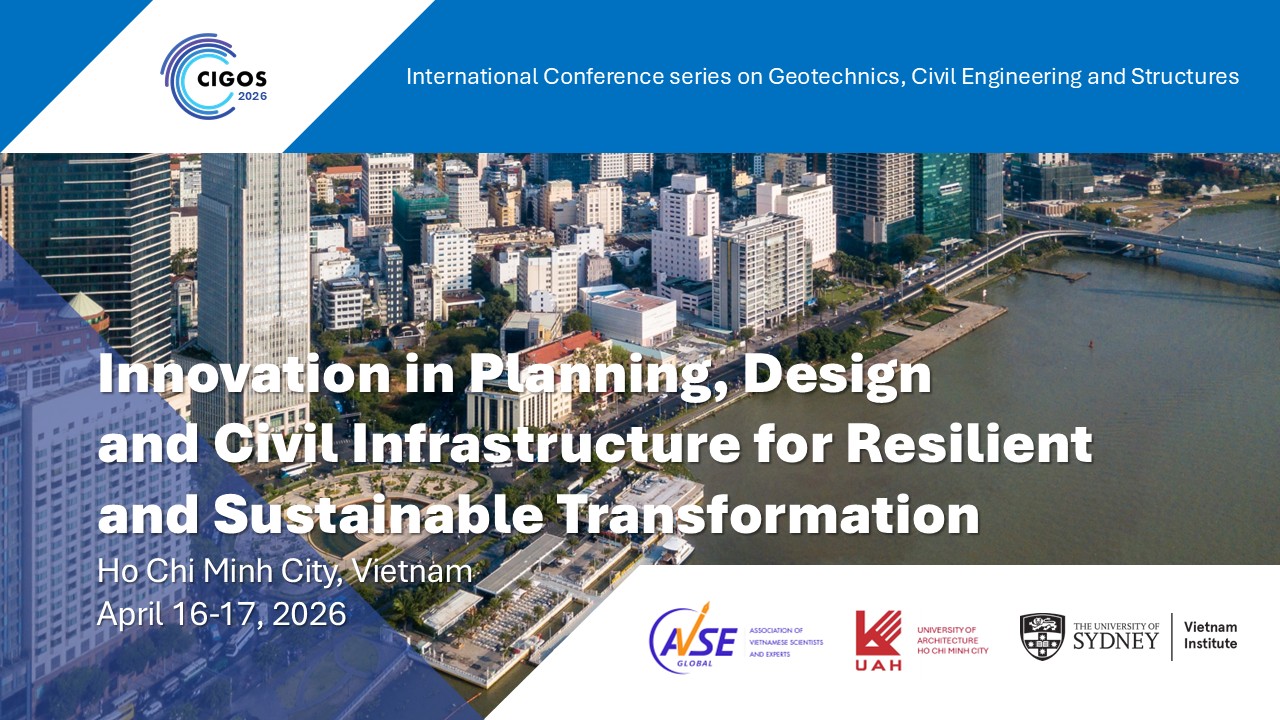
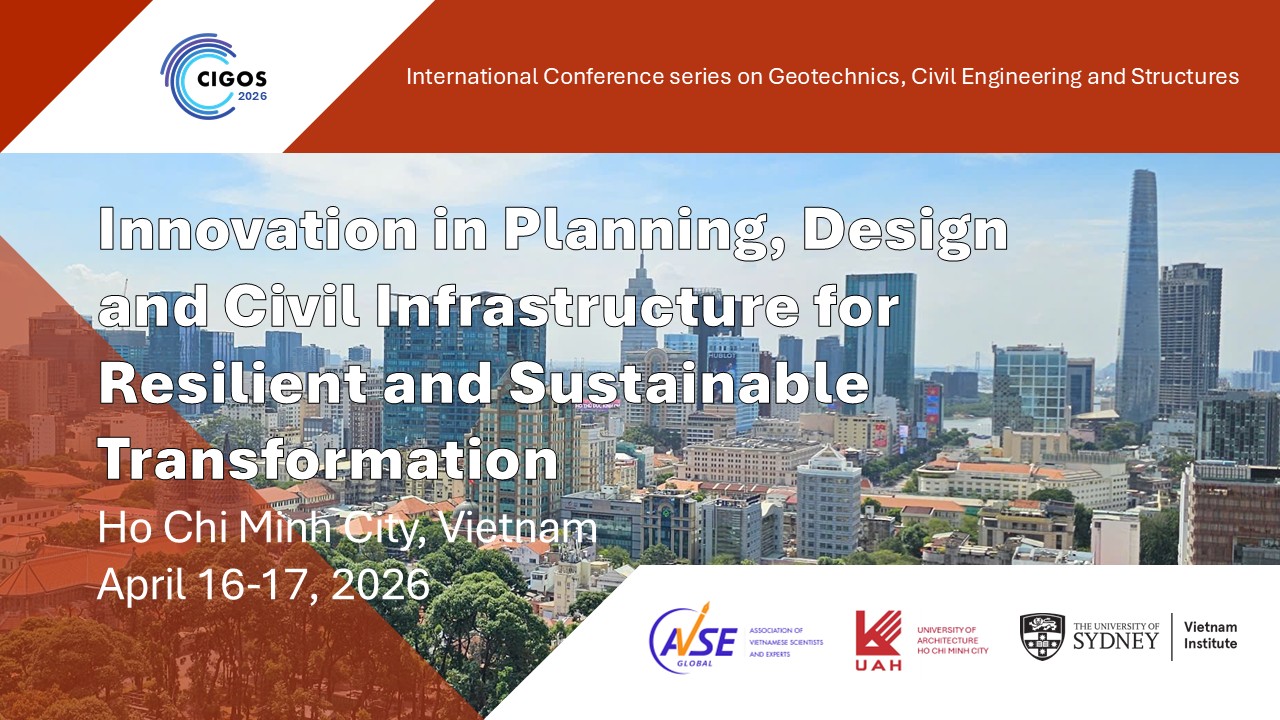
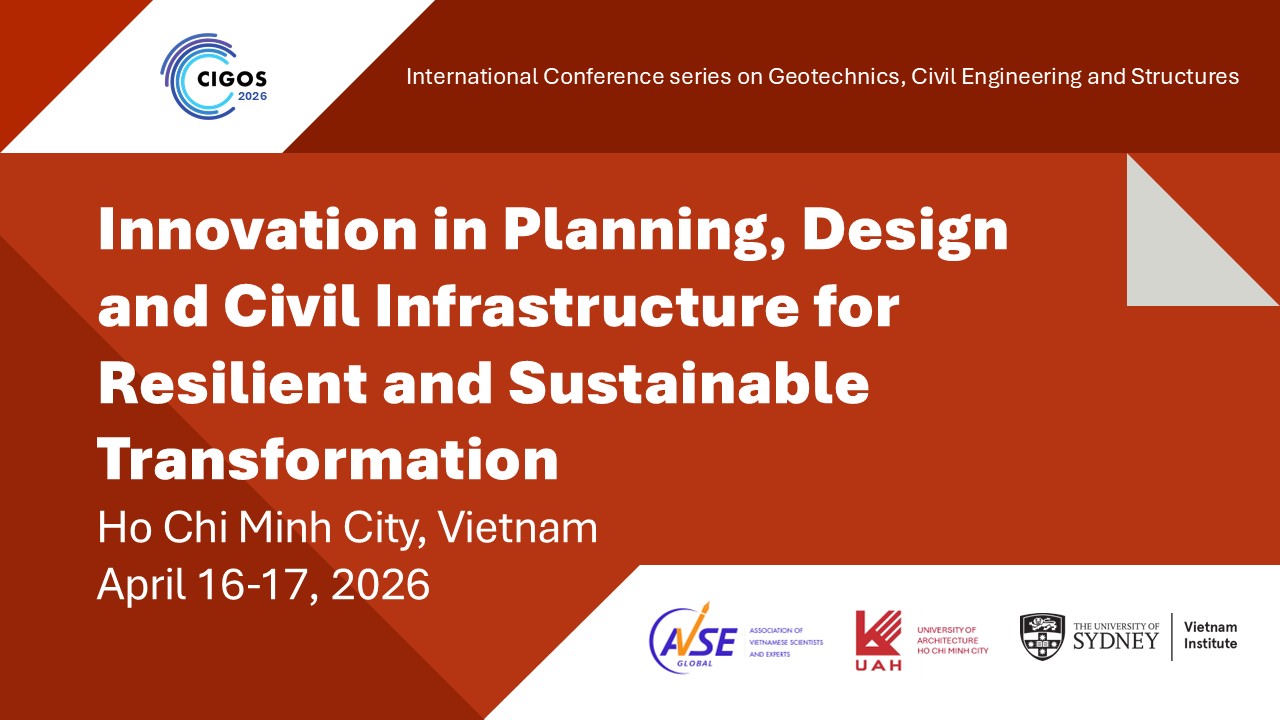
The 8th edition, CIGOS 2026, will be co-organized by the Association of Vietnamese Scientists and Experts (AVSE Global), the University of Architecture Ho Chi Minh City (UAH) and the University of Sydney Vietnam Institute (SVI), under the auspices of ISSMGE TC-309. The conference is scheduled to take place in Ho Chi Minh City, Vietnam on April 16 & 17, 2026, under the theme "Innovation in Planning, Design and Civil Infrastructure for Resilient and Sustainable Transformation".
CIGOS 2026 aims to address global challenges in creating resilient and sustainable infrastructure through innovation and interdisciplinary collaboration. The conference welcomes submissions from worldwide researchers, practitioners, and industry leaders. The key objectives of CIGOS 2026 are to:
Provide a platform for sharing knowledge, experiences, and recent advancements in civil engineering and related fields.
Foster economic partnerships and technological transfers among enterprises and institutions.
Strengthen international cooperation in research, education, and sustainable development.
All submitted papers will undergo rigorous peer review by at least two experts from the international scientific committee. Consistent with previous editions (2017, 2019, 2021, and 2024), the CIGOS 2026 proceedings will be published in the Lecture Notes in Civil Engineering series by Springer, indexed in Scopus.
CIGOS 2026 invites participants to join in Ho Chi MInh city, Vietnam’s vibrant economic and cultural hub, to exchange ideas, build collaborations, and contribute to shaping a resilient and sustainable future for global infrastructure.
Under the Auspices of:
KEYNOTE SPEAKERS
Hoang Thuc Hao
Lecturer, Hanoi University of Civil Engineering, Vietnam
Kenichi Soga
Professor, University of California, Berkeley, United States
Stuart Khan
Professor, University of Sydney, Australia
Pham Phu Cuong
Professor, University of Architecture Ho Chi Minh City, Vietnam
×
Hoang Thuc Hao
ARCHITECTURE AND THE WELL-BEING OF ALL BEINGS
In an era defined by Al advancement and globalization, as the world faces climate crises, environmental degradation, and deepening social inequalities, architecture is increasingly recognized not merely as the spatial organization of form, but as a profound act of socio-ecological responsibility.
We have remained steadfast in an alternative architectural praxis-one that is more deliberate, deeply rooted in local landscapes and communities, and imbued with reverence for all living things. This approach seeks to re-contextualize and redefine modernity by drawing from core vernacular "genes," shifting the architectural focus toward humanistic values, equity, and the collective flourishing of both humanity and the natural world.
The resulting works are "bespoke," meticulously tailored to specific topography, micro-climates, and the nuanced needs of each context, conceived as living entities capable of symbiosis with their inhabitants and the environment. By expanding the architect's role from mere designer to dedicated companion, this approach channels creative aspiration and social responsibility into empowering local communities through the collaborative practices of co-design and co-construction.
Ultimately, architecture emerges as a vital living process that cultivates identity, ignites collective inspiration, and forges a resilient future where both humanity and ecosystems can flourish in harmony.
×
Architect Hoang Thuc Hao
Arch. Hoang Thuc Hao is a Lecturer in the Faculty of Architecture and Planning at Hanoi University of Civil Engineering. He currently serves as Vice President of the Vietnam Association of Architects. Hoang Thuc Hao was the first Vietnamese architect to receive the SIA-GETZ Award for Outstanding Architect in Asia (2016), as well as two major triennial awards from the International Union of Architects (UIA): the Vassilis Sgoutas Prize for Implemented Architecture Serving the Impoverished (2017) and the Robert Matthew Prize for Sustainable and Humane Environments (2023). He was also the winner in the Civic and Community category at the World Architecture Festival in 2015 and received the Gold Medal at the Arcasia Awards for Architecture in 2020. Most recently, he was named one of the winners of the Global Awards for Sustainable Architecture 2025..
In addition, he has lectured at a wide range of universities worldwide, including the Art Institute of Chicago, Yale University, Cornell University, the National University of Singapore, the Institute for Contemporary Art in Berlin, the University of Puerto Rico at Mayagüez, the University of Quebec (Canada), the Guangzhou Academy of Fine Arts, Tsinghua University, Inner Mongolia University of Technology (China), and ESA Paris.
×
Kenichi Soga
The role of emerging technologies to realize smart infrastructure
The design, construction, maintenance, and upgrading of civil engineering infrastructure require innovative approaches to minimize the consumption of materials, energy, and labor. Achieving these goals hinges on a deep understanding of infrastructure performance, both during its construction and throughout its operational lifespan. This can be realized through advanced monitoring techniques. Recent breakthroughs in sensor technologies present exciting opportunities to revolutionize infrastructure condition assessment and monitoring. This talk explores the hypothesis that the future of infrastructure will rely on smarter, real-time information. Embedded sensors within infrastructure will provide valuable data, driving new processes for design, construction, operation, and maintenance—especially in integrated systems connected to user behavior patterns. We will discuss emerging sensor technologies, including distributed fiber-optic sensors, computer vision, wireless sensor networks, low-power micro-electromechanical systems (MEMS), energy harvesting, and the concept of citizens as sensors. These advancements promise to transform how we manage and improve infrastructure systems, paving the way for smarter, more sustainable cities.
×
Professor Kenichi Soga
Professor Kenichi SogaKenichi is the Donald H. McLaughlin Chair and a Distinguished Professor of Civil and Environmental Engineering at UC Berkeley. Soga is also the Director of the Berkeley Center for Smart Infrastructure, a faculty scientist at Lawrence Berkeley National Laboratory. His research focuses on infrastructure sensing, performance-based design and maintenance of infrastructure, energy geotechnics, and geomechanics from micro to macro.
He has published more than 500 journal and conference papers and is the co-author of "Fundamentals of Soil Behavior". He is a member of the National Academy of Engineering, a fellow of the UK Royal Academy of Engineering, the Institution of Civil Engineers (ICE), the American Society of Civil Engineers (ASCE), and the Engineering Academy of Japan. He has received several notable awards, including the George Stephenson Medal and Telford Gold Medal from ICE in 2006, the Walter L. Huber Civil Engineering Research Prize from ASCE in 2007, the 63rd Rankine lecture in 2025, and the UCB Bakar Prize for his work on commercializing smart infrastructure technologies in 2022.
×
Stuart Khan
Resilient and Sustainable Water Supplies for Global Cities
Reliable supply of clean, safe drinking water is an increasingly important hallmark of great global cities. As strong case that drinking water will be reliably available and reliably safe can be a deciding factor in location choices for global businesses, industries, and events. There have always been challenges to the delivery of these outcomes, but many of the challenges are now exacerbated due to climate change, urbanisation, and rapid population growth. Extreme weather events such as heatwaves, cyclones, floods and fires threaten the reliability of water quality while droughts severely threaten availability. This keynote presentation will discuss the changing risk profile for water supply infrastructure and the need for engineers and decision-makers to respond. Opportunities from alternative approaches for water supply will be presented with a series of global examples. Conference participants will be equipped with insights enabling longer-term thinking for the provision resilient and sustainable water supplies for global cities.
×
Professor Stuart Khan
Stuart Khan is Professor and Head of School of Civil Engineering at the University of Sydney. He has received funding for over 40 major competitive research projects from Australian, US and European funding agencies. He has published over 200 peer reviewed journal articles on issues relating to water quality and treatment, including drinking water, wastewater, recreational water, environmental water systems, water recycling and desalination. Stuart is a Fellow of scientific and engineering institutions, including Engineers Australia (FIEAust), The Academy of Technological Sciences and Engineering (FTSE), The Royal Society of Chemistry (FRSC), The Royal Society of NSW (FRSN), and is also an International Water Association IWA Fellow.
×
Stuart Khan
Resilient and Sustainable Water Supplies for Global Cities
Reliable supply of clean, safe drinking water is an increasingly important hallmark of great global cities. As strong case that drinking water will be reliably available and reliably safe can be a deciding factor in location choices for global businesses, industries, and events. There have always been challenges to the delivery of these outcomes, but many of the challenges are now exacerbated due to climate change, urbanisation, and rapid population growth. Extreme weather events such as heatwaves, cyclones, floods and fires threaten the reliability of water quality while droughts severely threaten availability. This keynote presentation will discuss the changing risk profile for water supply infrastructure and the need for engineers and decision-makers to respond. Opportunities from alternative approaches for water supply will be presented with a series of global examples. Conference participants will be equipped with insights enabling longer-term thinking for the provision resilient and sustainable water supplies for global cities.
×
Professor Stuart Khan
Stuart Khan is Professor and Head of School of Civil Engineering at the University of Sydney. He has received funding for over 40 major competitive research projects from Australian, US and European funding agencies. He has published over 200 peer reviewed journal articles on issues relating to water quality and treatment, including drinking water, wastewater, recreational water, environmental water systems, water recycling and desalination. Stuart is a Fellow of scientific and engineering institutions, including Engineers Australia (FIEAust), The Academy of Technological Sciences and Engineering (FTSE), The Royal Society of Chemistry (FRSC), The Royal Society of NSW (FRSN), and is also an International Water Association IWA Fellow.
×
Pham Phu Cuong
The Architectural Profile of Saigon–Ho Chi Minh City Across Periods
Over time, Saigon–Ho Chi Minh City has accumulated diverse architectural layers—from indigenous and Sino–Vietnamese forms to French colonial ensembles, mid-20th-century tropical modernism, and contemporary high-rise development. Drawing on archival research, field observations, and typological mapping, the study identifies key urban and architectural typologies and their associated morphological characteristics. The presentation argues that urban heritage in Saigon HCMC should be extended beyond colonial monuments to include modernist, vernacular, and everyday urban fabric. In today rapid redevelopment, land-use pressures, and market-driven dynamics, both tangible heritage and cultural continuity have been threaten. The presentation further contends that integrated conservation strategies are needed to balance identity, memory, and future growth in fast-changing megacities.
×
Dr. Pham Phu Cuong
Pham Phu Cuong is a Vietnamese architect, researcher, and academic leader specializing in architectural heritage, urban space, and contemporary Vietnamese architecture. He holds a PhD in Architecture from the University of Architecture Ho Chi Minh City (UAH, 2015), where he currently serves as Dean of the Faculty of Architecture. He is also Vice President of the Ho Chi Minh City Architects Association and a member of the Executive Committee of the Vietnam Association of Architects.
With more than 30 years of professional and academic experience, he has contributed to curriculum reform, national architectural research programs, and policy advisory boards in Ho Chi Minh City. His research centers on urban heritage and architectural conservation, and he has published extensively in Vietnam’s leading architectural journals and conferences.
INVITED SPEAKER
Jane Gavan
Associate Professor, University of Sydney, Australia
×
Associate Professor Jane Gavan
Associate Professor Jane Gavan is an artist-researcher, curator, and academic at The University of Sydney, based at Sydney College of the Arts. Her interdisciplinary work operates across art, design, manufacturing, and cultural heritage, exploring how creative practice can contribute to innovation in material science, fabrication processes, and socially engaged cultural institutions.
Jane's research connects artists, designers, engineers, and manufacturers through collaborative projects that examine material knowledge and production cultures. In the glass industry she has worked with international manufacturers including SCHOTT and colour technology companies Radiant Color and DayGlo Color in Europe and the United States, investigating colour systems, glass production, and the relationship between industrial processes, creative practice, and innovation.
Since 2015 Jane has worked extensively in Vietnam in collaboration with the University of Architecture Ho Chi Minh City and partners across the country’s museum and cultural heritage sector, including government organisations and the Ministry of Culture, Sports and Tourism. Her recent exhibition Food and War in Southern Vietnam, presented at the War Remnants Museum in Ho Chi Minh City, explored the material culture of wartime survival through food, memory, and community storytelling.
At the University of Sydney, she has previously served as Associate Dean (Education) and currently contributes to academic leadership as a curriculum coordinator. Jane is a member of the Academic Advisory Board of the Sydney Vietnam Institute and part of the leadership team of the Sydney Vietnam Academic Network. Her current research is supported by a 2026 seed research grant from the Sydney Vietnam Institute.
×
Jane Gavan
From Smart Systems to Situated Intelligence: Cultural, Material, and Ethical Knowledge for Vietnam’s Digital Futures
Vietnam is entering a decisive phase of national transformation driven by artificial intelligence, data analytics, digital infrastructure, advanced construction technologies, and large-scale urban and transport development. While these systems promise efficiency and economic growth, international research on digital ethics and smart urbanism (e.g. Floridi) shows that dominant “smart system” models-largely shaped by Global North assumptions-often struggle to engage adequately with cultural context, lived experience, and ethical responsibility..
This paper argues that Vietnam’s next stage of innovation depends not only on technical capacity, but on situated intelligence: knowledge generated through manufacturing collaboration, material engagement, embodied expertise, and care-based ethics. Drawing on long-term, interdisciplinary, practice-led research conducted in Vietnam between 2014 and 2026-including manufacturing and factory collaboration, museum-based research, exhibition-making, community engagement, and policy-adjacent consultancy-the paper positions artists, designers, curators, and interdisciplinary researchers as critical mediators between digital systems and social realities.
Engaging scholarship in urban studies and material culture (Latour; Sennett), the paper examines five intersecting domains: artificial intelligence and data analytics; construction, materials, and digital technologies; environment, geoscience, and energy; planning, architecture, and industrial design; and transportation and infrastructure. Across these domains, the analysis demonstrates how efficiency-driven, data-led systems can unintentionally flatten local knowledge, marginalise tacit expertise, and overlook forms of intelligence embedded in Vietnamese manufacturing practices, environmental adaptation, and community resilience.
Rather than opposing technological development, the paper proposes an integrated framework in which interdisciplinary cultural research strengthens digital transformation through ethical insight, participatory design, trauma-aware approaches, and hybrid evaluation models combining quantitative and experiential data. It concludes that Vietnam is uniquely positioned to lead internationally in the development of wise systems that are culturally grounded, socially inclusive, and ethically robust.
Highlights of Cigos 2024
TOPICS
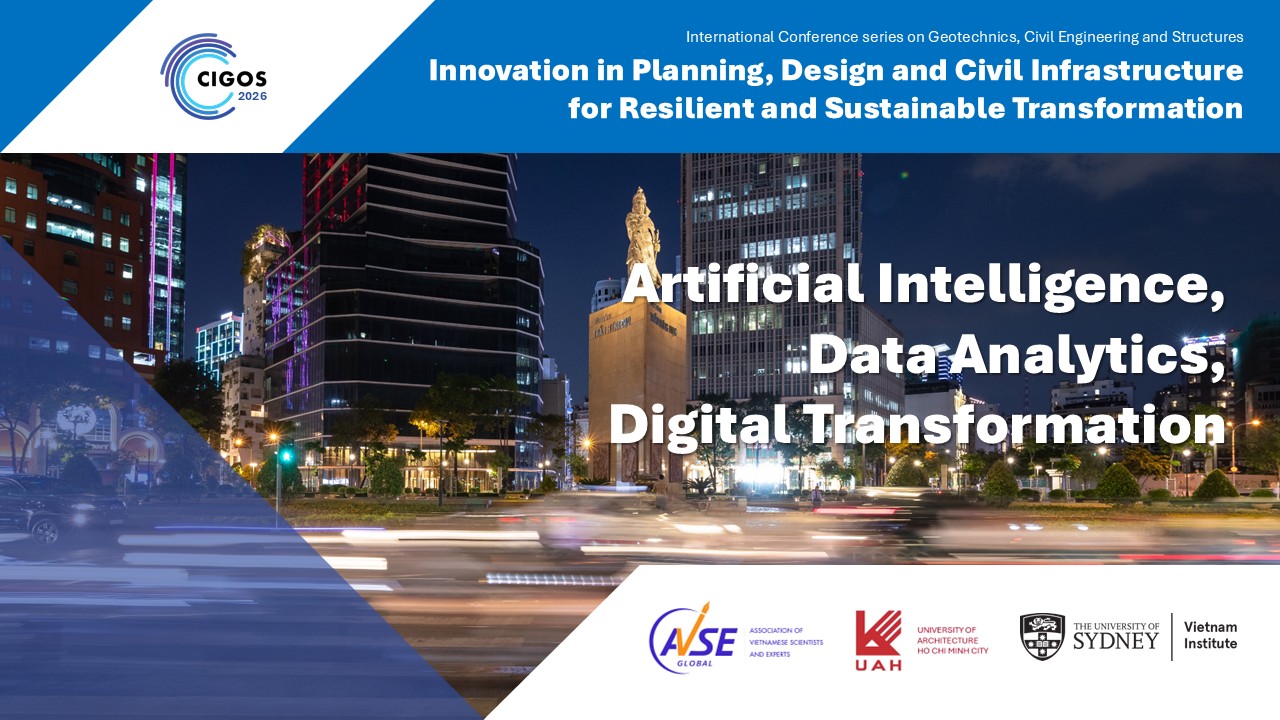
Artificial Intelligence, Data Analytics, Digital Transformation
Construction, Materials, Structures, Digital Technologies
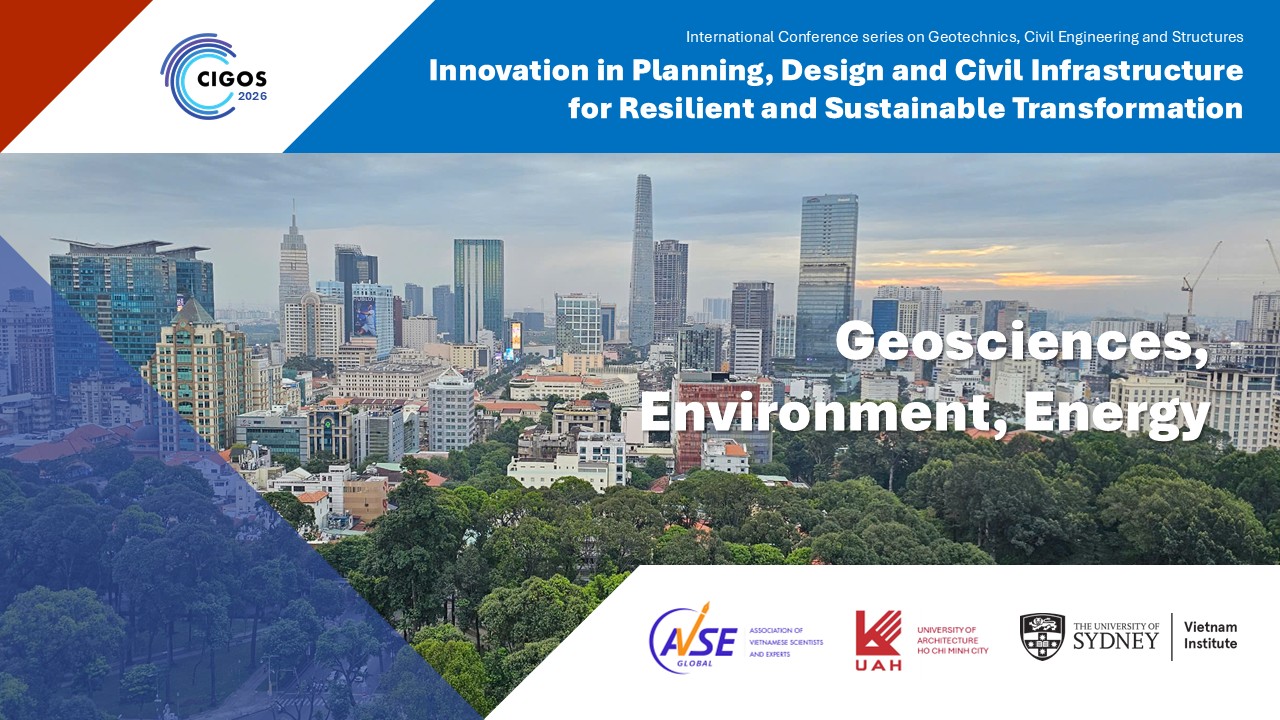
Geosciences, Environment, Energy
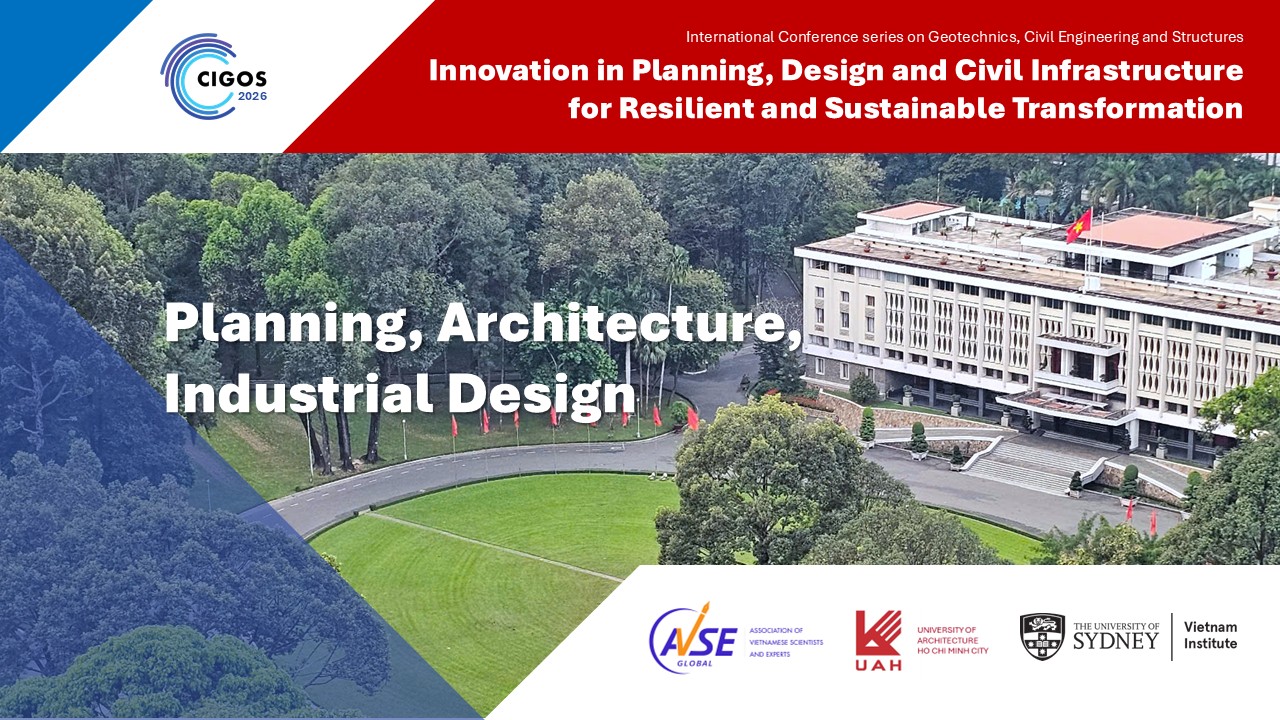
Planning, Architecture, Industrial Design
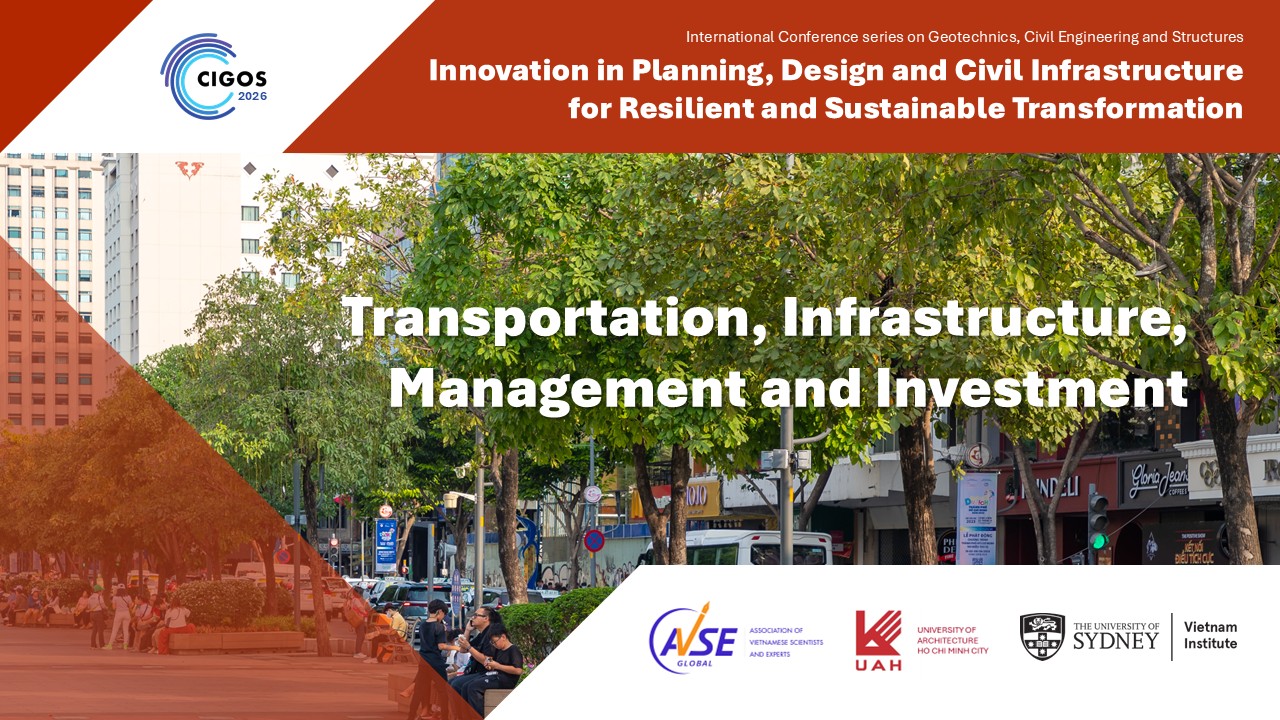
Transportation, Infrastructure, Management and Investment
 Loading...